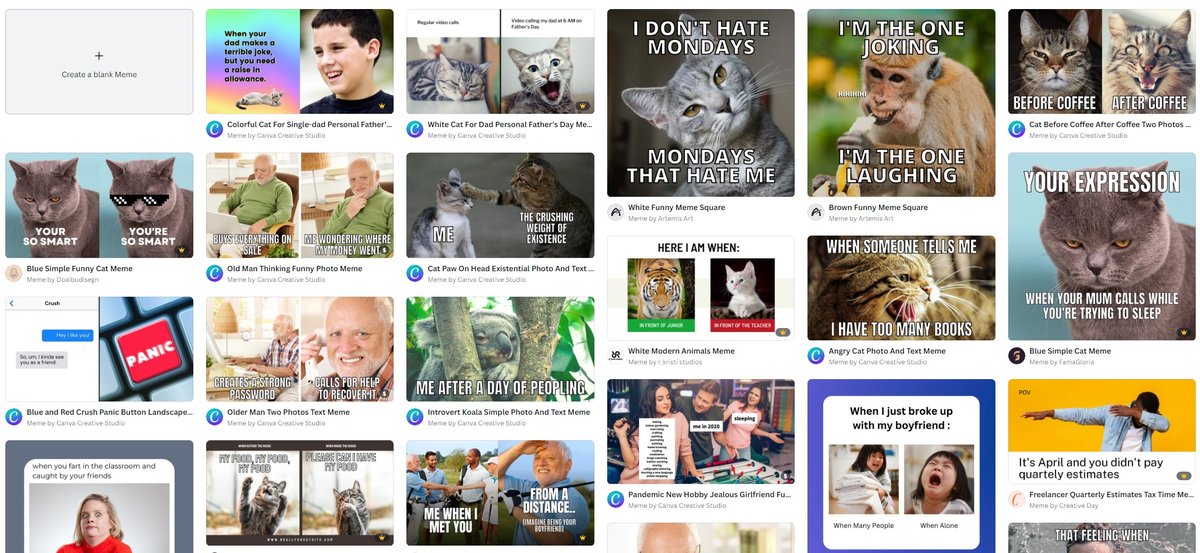
In an age saturated with digital noise, standing out isn't just about what you say, but how you say it. And when it comes to capturing attention, sparking conversation, and truly connecting with your audience, few tools are as potent as a well-crafted meme. But we're not talking about just any meme; we're talking about customizing memes in Canva for unique visuals that cut through the clutter and speak directly to your specific message.
Forget the generic templates you see everywhere. While popular memes offer a universal language, true impact comes from adding your unique twist – a personal touch that transforms a fleeting laugh into a memorable moment, or even a deep reflection. Think about the recent "monk meme" that swept social media, sparking profound discussions on self-improvement, focus, and the universal struggle with distraction. It wasn't just funny; it resonated because it tapped into a shared human experience.
This guide isn't just about slapping text on an image; it's about mastering the art and science of meme customization in Canva to create visuals that don't just entertain, but also inform, inspire, and build community.
At a Glance: What You'll Discover
- Why custom memes matter more now than ever: Move beyond humor to leverage memes for deeper connection.
- The magic of Canva: How this user-friendly platform empowers anyone to be a meme master.
- Core elements of a killer custom meme: What goes into making it pop.
- Step-by-step customization guide: From idea to viral-ready visual.
- Advanced tips & tricks: Elevate your meme game beyond the basics.
- Common pitfalls to sidestep: Keep your content on point and professional.
Beyond the Punchline: Why Memes Matter More Than Ever
Memes have evolved far beyond internet inside jokes. They are the new lingua franca of the digital world, capable of conveying complex emotions, shared frustrations, and profound insights in a digestible, often humorous, format. Remember that monk meme we just mentioned? It wasn't just a fleeting trend. It became a communal space where people shared their struggles with maintaining focus, completing tasks, and overcoming distractions, echoing a widespread desire for quick fixes in personal growth.
This phenomenon highlights a crucial truth: memes offer a unique blend of relatability and shared experience. They remind us, often with a wink and a nod, that "we all feel lost sometimes." This isn't just entertainment; it's empathy. This communal sharing of struggles and aspirations draws a fascinating parallel to the self-help bookstore boom of the late 1990s. Both mediums provide accessible guidance during inner turmoil, fostering a sense of community among individuals wrestling with similar challenges.
For content creators, marketers, educators, and anyone looking to communicate effectively online, this deeper resonance makes custom memes an invaluable asset. They aren't just for viral laughs; they're for building authentic connections, fostering dialogue, and addressing universal issues with a human touch. Generic memes, while sometimes effective, lack the unique fingerprint that truly sets your message apart and elevates your content beyond the noise.
The Power of Personalization: Why Generic Memes Fall Flat
Imagine trying to communicate a nuanced brand message or a specific call to action using a meme that's been shared a million times, often with completely different contexts. It's like wearing an ill-fitting suit – it might cover the basics, but it won't make a lasting impression. Generic memes, by their very nature, are designed for mass appeal, which often means they lack the specificity needed to truly connect with your unique audience or convey your particular point of view.
When you customize a meme, you're not just changing the text; you're infusing it with your brand's voice, your specific insights, and your audience's unique pain points or aspirations. This personalization transforms a passive viewing experience into an active engagement. Your audience recognizes the effort, appreciates the relevance, and feels a stronger connection because the content feels tailor-made for them. This leads to higher engagement rates, increased shareability, and a more memorable impact, distinguishing you from the sea of identical content.
Your Creative Control Center: Why Canva for Meme Customization?
You don't need a graphic design degree or expensive software to craft stunning, custom memes. This is where Canva shines brightest. It democratizes design, putting professional-grade tools into the hands of anyone with an idea and an internet connection.
Canva's intuitive drag-and-drop interface, extensive library of templates, fonts, elements, and stock photos makes the process remarkably straightforward. Whether you're a seasoned designer or a complete novice, you can quickly navigate the platform and bring your meme vision to life. The ability to easily upload your own images, remove backgrounds, apply filters, and integrate your brand's specific colors and fonts means limitless creative control, without the steep learning curve. The platform offers a fantastic Canva meme generator that provides a starting point for countless ideas.
It's efficient, versatile, and accessible – everything you need to transform a fleeting thought into a compelling visual story that resonates with your audience.
Deconstructing a Custom Meme: Key Elements to Master
Before you dive into Canva, understanding the anatomy of a compelling custom meme will sharpen your focus and elevate your designs. Each element plays a crucial role in its overall impact.
The Image or Video Base: The Foundation of Your Message
This is the visual anchor that sets the tone. Choosing the right base is paramount.
- Relevance: Does the image inherently relate to your message or evoke the desired emotion? A confused expression works for confusion, a serene monk for focus.
- Quality: High-resolution images are non-negotiable. Blurry visuals undermine credibility.
- Ethical Sourcing: Be mindful of copyright. Canva's vast library offers royalty-free options, or you can use your own original photos or videos. Fair use typically covers parody, but it's always wise to err on the side of caution, especially for commercial use.
- The "Memeability" Factor: Some images just have that inherent quality that makes them perfect for various captions. Think universally recognizable expressions or scenarios.
Text & Typography: The Voice of Your Meme
The words you choose, and how you present them, are critical to conveying your unique twist.
- Conciseness: Memes are quick hits. Keep your text brief, impactful, and easy to read at a glance.
- Clarity: Your message should be unmistakable, even with a dash of irony or humor.
- Font Choice: Typography communicates tone. A bold, sans-serif font often signals humor or directness, while a more elegant serif font might convey a sophisticated, reflective message. Ensure readability, especially on smaller screens.
- Placement & Contrast: Position text clearly against the background. Use outlines, shadows, or solid color blocks behind text to ensure it pops, regardless of the image's complexity.
Branding Elements: Subtle, Not Salesy
If you're customizing memes for a brand or personal platform, subtle integration is key.
- Logo Placement: A small, unobtrusive logo in a corner can build brand recognition without turning your meme into an ad.
- Color Palette: Incorporate your brand's colors in text, borders, or subtle graphic elements to reinforce identity.
- Tone of Voice: Beyond visuals, ensure the meme's caption aligns with your established brand voice – whether it's witty, reflective, informative, or edgy.
Overlay Graphics & Elements: Adding Flair and Emphasis
Canva's extensive library of graphics can enhance your meme's message.
- Emojis & Stickers: Use sparingly for added emotion or emphasis.
- Shapes & Lines: Draw attention to specific areas, create visual breaks, or add borders.
- Illustrations: Sometimes a small icon or illustration can replace a whole sentence.
The "Relatable Twist": Making it Uniquely Yours
This is the secret sauce. It's about taking a popular meme format and bending it to your specific context, audience, or message.
- Connect to Current Events/Audience Specifics: Link the meme to a shared experience only your audience understands, or a recent trend.
- Personal Insight: Offer a unique perspective or a deeper reflection that resonates with your community's struggles, like the shared frustrations around productivity that the monk meme tapped into.
- Unexpected Juxtaposition: Combine elements in a surprising way that sparks thought or humor.
Crafting Your Unique Visuals in Canva: A Step-by-Step Guide
Ready to transform your ideas into engaging custom memes? Here's how to do it in Canva.
Step 1: Ideation – What's Your Message?
Before you even open Canva, clarify your purpose. Are you aiming for humor, reflection, inspiration, or to highlight a specific problem?
- Audience Analysis: Who are you trying to reach? What are their interests, pain points, and sense of humor? The "monk meme" resonated because it spoke to a universal struggle for focus and self-improvement – find your audience's equivalent.
- Brainstorm Concepts: Jot down ideas, funny observations, common frustrations, or poignant thoughts that relate to your niche. Think about internal jokes or specific scenarios that only your community would understand.
- Emotional Resonance: What feeling do you want to evoke? Laughter, empathy, motivation, curiosity?
Step 2: Starting Strong – Template or Blank Canvas?
Canva offers multiple entry points.
- Using Canva's Meme Generator: If you have a specific popular meme format in mind, start by searching for "Canva meme generator" or "meme" in Canva's template library. This provides pre-sized canvases and often popular meme layouts you can quickly adapt.
- Adapting Existing Templates: Browse Canva's vast array of social media templates (Instagram Post, Facebook Post, X Post, etc.). Many can be easily customized into meme formats.
- Starting from Scratch: For ultimate creative freedom, choose a custom size (e.g., 1080x1080 pixels for Instagram) and build your meme from the ground up.
Step 3: Visual Selection – The Heart of Your Meme
The image is the first thing people see.
- Canva's Library: Use the "Photos" or "Elements" tab to search for relevant images. Keywords are your best friend here (e.g., "thinking man," "confused dog," "lightbulb moment").
- Upload Your Own: Have a perfect photo or screenshot? Click "Uploads" to bring it into Canva. This is ideal for truly unique content.
- Image Editing: Once placed, click the image to access editing options. You can crop, flip, rotate, adjust brightness/contrast, apply filters, or even use the "Background Remover" tool (Pro feature) to isolate subjects.
Step 4: Text That Sings (or Snarks)
This is where your unique message comes to life.
- Adding Text Boxes: Go to the "Text" tab and choose a heading, subheading, or body text option. Drag and resize as needed.
- Font Selection: Experiment with different fonts. A good rule of thumb for memes is to use clear, legible sans-serif fonts like Montserrat, Anton, or League Spartan. Pair a primary font with a secondary one for variety if necessary.
- Sizing and Placement: Ensure your text is large enough to read easily on any device. Position it strategically so it doesn't obstruct key parts of your image.
- Color & Effects: Use the color picker to match your brand or create contrast. Add text effects like outlines, shadows, or even curved text for extra flair. Ensure high contrast between text and background for readability.
Step 5: Enhancing with Elements
Canva's "Elements" tab is a treasure trove for adding visual punch.
- Icons & Graphics: Search for arrows, stars, speech bubbles, or abstract shapes to draw attention or illustrate points.
- Stickers & Emojis: If appropriate for your tone, add animated stickers or static emojis for an extra layer of expression.
- Lines & Shapes: Use these to create visual dividers, frames, or to highlight specific parts of your meme.
- Layering: Remember you can layer elements. Use the "Position" tool to bring items forward or send them backward, creating depth.
Step 6: Brand Integration (Subtlety is Key)
If this meme represents your brand, weave in your identity subtly.
- Brand Kit: If you have a Canva Pro account, use your pre-set Brand Kit for consistent colors and fonts.
- Logo: Place a small, transparent version of your logo in a corner, out of the main action but still visible.
- Color Accents: Use your brand colors for text highlights, borders, or small graphic elements.
Step 7: Review and Refine
Don't rush this step!
- Proofread: Typos kill credibility faster than anything.
- Clarity Check: Is your message clear? Does the humor land?
- Mobile Test: View your meme on a phone screen. Text can be too small or elements too crowded on mobile.
- Gut Check: Does it feel authentic to your brand/message? Would your audience "get it"? Sometimes a quick share with a trusted friend can provide valuable feedback.
Step 8: Exporting and Sharing
You've made your masterpiece – now unleash it!
- Download Format:
- PNG: Best for high-quality images with text.
- JPG: Good for smaller file sizes, especially if your meme is photo-heavy.
- GIF (Pro): For simple animations or short video clips.
- MP4 (Pro): If you've included video elements or more complex animations.
- Platform Specifics: Consider the aspect ratio and file size limits of the platform you're sharing on. Canva often suggests optimal dimensions for various social media channels.
Advanced Techniques for Meme Mastery
Ready to take your custom memes to the next level?
- Animated Memes for Extra Flair: Canva Pro allows you to create simple animated GIFs or video memes. Add subtle motion to text, make elements appear/disappear, or create short, looping clips to grab attention in a feed. Even a gentle fade or slide can make a static image more dynamic.
- Background Removal Magic: Isolate subjects from photos to place them in entirely new, humorous, or unexpected contexts. This tool opens up a world of surreal and highly customizable meme possibilities, allowing you to remix visuals in unique ways.
- Beyond the Logo: True Brand Voice Integration: Don't just slap a logo on it. Think about how the language, the tone, and even the choice of image consistently reflect your brand's personality. If your brand is playful, your memes should reflect that. If it's more reflective, infuse that introspection. This subtle consistency builds a strong, recognizable brand identity over time.
- Meme Series & Thematic Campaigns: Create a series of custom memes around a recurring theme or character. This builds anticipation and allows for ongoing narratives, helping your audience follow along and connect more deeply with your content over time. Imagine a series of "productivity struggles" memes, all using a similar visual style, reinforcing the shared human experience we discussed earlier.
Pitfalls to Avoid When Customizing Memes
While the creative freedom of customizing memes is liberating, a few missteps can undermine your efforts.
- Over-branding: Your meme should primarily be a relatable piece of content, not a blatant advertisement. A giant logo or excessive brand messaging will make it feel inauthentic and reduce shareability. Subtlety is key to integrating your brand without sacrificing the meme's integrity.
- Losing the "Meme Essence": Customization is great, but don't stray so far from the original meme's format or humor that it becomes unrecognizable. The power of a meme often lies in its familiarity; your twist should enhance, not erase, that recognition. Ensure it still feels like a meme, not just a branded graphic.
- Offensive or Insensitive Content: Memes thrive on humor, but humor is subjective. Be incredibly mindful of cultural sensitivities, stereotypes, and potential misinterpretations. What seems funny to you might be offensive to others. When in doubt, err on the side of caution. Review your content through diverse perspectives.
- Poor Readability: If your audience can't easily read the text, your message is lost. Avoid cluttered backgrounds, small fonts, or low-contrast color combinations. Remember, many people will see your meme on a small mobile screen.
- Copyright Infringement (Beyond Fair Use): While memes often walk a grey line with fair use for parody and commentary, using copyrighted images for direct commercial gain without permission can lead to legal issues. Stick to Canva's stock library, public domain images, or your own original content to be safe.
When to Go Custom vs. When to Share
Not every viral meme needs your personal touch. Sometimes, sharing an existing, highly relevant meme is perfectly effective. The decision to customize or simply share depends on your goal.
- Go Custom When:
- You have a specific, unique message that isn't perfectly captured by existing memes.
- You want to reinforce your brand voice or visual identity.
- You need to address a niche topic or inside joke only your audience understands.
- You're aiming for deeper engagement and memorability, building a stronger connection.
- You want to stand out from generic content and show creative effort.
- Simply Share When:
- An existing meme perfectly encapsulates your sentiment without alteration.
- You want to participate in a current, fast-moving trend where speed is more important than customization.
- Your goal is simply to show you're "in the know" and relatable.
- You have limited time or resources for creation.
FAQs: Your Meme Customization Conundrums Solved
Is it okay to use copyrighted images for memes?
It's a complex area. "Fair use" doctrines often protect the use of copyrighted material for parody, criticism, commentary, or education. Many memes fall under this. However, if you're using a copyrighted image for direct commercial advertising or in a way that could harm the original creator, you could face issues. For brand content, it's safest to use Canva's royalty-free images, public domain images, or your own original photos.
How often should I post custom memes?
There's no magic number. Quality trumps quantity. Focus on creating impactful memes that resonate rather than churning them out daily. Listen to your audience, analyze engagement, and post when you have something genuinely witty, insightful, or relevant to share. The monk meme's impact wasn't just about its frequency, but its resonance.
What's the best font for memes?
Readability is paramount. Bold, clear, sans-serif fonts are generally best. Popular choices include Impact (the classic meme font), Montserrat, Anton, League Spartan, or even Comic Sans (used ironically, of course). Ensure good contrast with the background.
How do I make my custom meme go viral?
Viral success is never guaranteed, but you can increase your chances:
- Relatability: Tap into universal experiences, emotions, or frustrations (like the self-improvement struggles).
- Originality with Familiarity: Offer a unique twist on a recognizable format.
- Timeliness: Connect to current events, trends, or popular culture.
- Emotional Impact: Make people laugh, think, or feel seen.
- Simplicity & Clarity: Easy to understand at a glance.
- Shareability: Encourage likes, comments, and shares, often by asking a question or sparking a discussion.
Elevating Your Visual Storytelling
Customizing memes in Canva isn't just about creating a funny picture; it's about mastering a powerful form of visual storytelling. It’s a chance to inject personality, communicate complex ideas succinctly, and build genuine connections. In a world craving authenticity and relatability, your uniquely crafted visuals can become beacons, guiding your audience to deeper discussions and stronger community ties.
As the digital landscape continues to evolve, with experts predicting a rise in forums dedicated to mental health and productivity hacks, memes will continue to play a pivotal role in these dialogues. They offer comfort, encourage introspection, and remind us that "we all feel lost sometimes." By embracing the art of customizing memes, you're not just keeping up with trends; you're actively shaping conversations and fostering meaningful engagement.
So, roll up your sleeves, fire up Canva, and start experimenting. Your unique visual voice is waiting to be heard.